What made Camden Place such an interesting place to live? Why was it called Camden Place? Learn the answers to these questions and more in this episode of My Cousin Jane.
Welcome back to My Cousin Jane. Today we’re going to be talking about Persuasion, Volume 2, Chapter 3, also known as Chapter 15.
As always, we’re shying away from things like “the dark pathos of the human experience represented by the author,” and instead focusing on what you might think of as the behind-the-scenes featurette of your favorite movie.
Last week, we talked briefly about the geography of Bath, at least as relates to the novel. This week, we’re going to explore those locations in a bit more detail.
Chapter Summary
In brief
In this chapter, Anne arrives at her father’s house in Bath, which Jane Austen describes as “a very good house in Camden Place, a lofty dignified situation, such as becomes a man of consequence.” We also get our first real look at Mr. Elliot.
Earl Camden
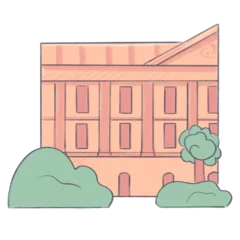
Camden Place is known today as Camden Crescent. It’s a series of townhouses in Bath that was built by John Eveleigh in the late 1700s, and it was named for Charles Pratt, the 1st Earl Camden.
He had a fascinating legal and political career, and was involved in a bunch of the events that led up to America’s Revolutionary War. He’s considered a champion of colonial rights by many American historians, though he was definitely first and foremost a patriot to the British Empire.
He was particularly opposed to actions that he felt would draw England and the American colonies into war, and had an active role opposing such measures as the infamous Stamp Act and the New England Trade and Fishery Bill. He also gave speeches in Parliament in defense of colonial rights, at least one of which historians suspect was actually written by Benjamin Franklin.
Though most historians argue that he was less concerned with American colonists and more concerned with keeping England out of a war, because so many Americans viewed him as a champion of colonial rights, many places in the United States are also named in his honor, including the towns of Camden, Maine; Camden, South Carolina; Camden, North Carolina; Camden, New Jersey; and Camden counties in New Jersey, Missouri, and Georgia.
It’s interesting that those locations are named after the same man that Camden Place in Persuasion was named after.
Camden Crescent
As I mentioned earlier, Camden Place was built in the late 1700s by John Eveleigh. Unfortunately, in the 1800s, there were a series of landslides in Bath that caused the collapse of several of the houses of Camden Place, as well as other housing developments. The damaged houses were subsequently demolished, and the city acquired that land and turned it into what is now Hedgemead Park.
The result is that Camden Crescent now looks a bit lopsided. Originally, the center house of the townhouse structure was this big fancy house with this triangular pediment and a bunch of columns. That house is still there, but due to the landslides, it’s no longer in the center. Some of the houses on the eastern side have collapsed and been demolished, and so it looks a little bit lopsided.
Let’s listen to a description of the house in Camden Place that Sir Walter rents, courtesy of the talented Karen Savage at LibriVox.org:
Their house was undoubtedly the best in Camden Place; their drawing-rooms had many decided advantages over all the others which they had either seen or heard of, and the superiority was not less in the style of the fitting-up, or the taste of the furniture. Their acquaintance was exceedingly sought after. Everybody was wanting to visit them. They had drawn back from many introductions, and still were perpetually having cards left by people of whom they knew nothing.
Here were funds of enjoyment. Could Anne wonder that her father and sister were happy? She might not wonder, but she must sigh that her father should feel no degradation in his change, should see nothing to regret in the duties and dignity of the resident landholder, should find so much to be vain of in the littlenesses of a town; and she must sigh, and smile, and wonder too, as Elizabeth threw open the folding-doors and walked with exultation from one drawing-room to the other, boasting of their space; at the possibility of that woman, who had been mistress of Kellynch Hall, finding extent to be proud of between two walls, perhaps thirty feet asunder. Persuasion, Chapter 15
In Sir Walter and Elizabeth’s defense, the space between those two walls thirty feet asunder was still pretty nice. There were actually several properties for sale in Camden Crescent when I was writing this episode, so I was able to look at their floor plans and interiors.
The houses were originally built with three main stories, as well as basements and attic spaces. According to the real estate firm Stonier Hobbs, all but two of the houses in Camden Crescent have been divided up into apartments. One of the houses that still remains intact, number 7 Camden Crescent, is a 5,800 square foot home currently listed for sale at 2.1 million pounds, which is about 2.8 million dollars.
Marlborough Buildings
In this chapter, we’re also introduced to Colonel Wallis, at least by name. He and his wife are staying at Marlborough Buildings, which is about a half-mile walk from Camden Place, just on the other side of the Royal Crescent. Houses in that quarter were not as grand or expensive as those in Camden Place, but were obviously fashionable enough to recommend Colonel Wallis to Sir Walter.
I couldn’t find any current real estate listings for Marlborough Buildings, but there’s a flat for sale in one of the buildings that looks to take up the lower half of the house. It’s 1,400 square feet, and a real bargain at just 800,000 pounds, or about a million dollars.
I find it helpful to have this relative geography and affluence in mind as we read these chapters that take place in Bath, because they take on a certain significance to Sir Walter, who likes to judge people based on, well, I guess based on pretty much everything, but in this case on the part of the town they live in. Which is ironic, considering how he had to vacate Kellynch in relative financial disgrace.
Bond Street
There’s one more location I want to talk about today, but let’s listen to a clip about it from this chapter:
Sir Walter thought much of Mrs Wallis; she was said to be an excessively pretty woman, beautiful. “He longed to see her. He hoped she might make some amends for the many very plain faces he was continually passing in the streets. The worst of Bath was the number of its plain women. He did not mean to say that there were no pretty women, but the number of the plain was out of all proportion. He had frequently observed, as he walked, that one handsome face would be followed by thirty, or five-and-thirty frights; and once, as he had stood in a shop on Bond Street, he had counted eighty-seven women go by, one after another, without there being a tolerable face among them. Persuasion, Chapter 15
There are currently two Bond Streets in Bath: an Old Bond Street and a New Bond Street, and both are just around the corner from the Pulteney Bridge, which crosses the River Avon.
Old Bond Street is currently a narrow, pedestrian-only thoroughfare lined on both sides with shops, though the shops have certainly changed since Persuasion was written. It connects to New Bond Street on the northern end.
I thought perhaps that, given the name, New Bond Street would have been too recent a construction for Sir Walter to have visited, but both streets exist on the earliest street map I could find of Bath, which was surveyed in 1882. I’m inclined to think that Sir Walter was on New Bond Street, because he doesn’t strike me as the kind of person who would have liked a narrow pedestrian thoroughfare.
Either way, both Bond Streets would have been about a 15-minute walk for him from Camden Place.
Conclusion
That wraps up this episode of My Cousin Jane. As always, if you enjoy the show and would like to help support us, please consider clicking the little donate button or subscribing to our newsletter. Either way, thanks so much for listening.